
Forex Free Trading Signals 2026 High-Volatility Update: Scalper Playbook
Introduction
Scalping high-volatility forex markets can feel like driving a race car with fogged-up windows: the speed is exciting, but one bad read costs you the whole day. You know the feeling — you stack liquidity sessions, watch spreads, and still end up chasing entries that move before you click. That’s exactly where Forex Free Trading Signals can help, especially when they’re engineered specifically for global scalpers facing 2026’s faster, more fragmented market conditions.
Forex Free Trading Signals as a brand focuses on one thing: giving active traders and scalpers high-quality, time-sensitive Forex Free Trading Signals without paywalls, while still respecting risk, latency, and real-life execution constraints. Instead of generic “buy/sell” calls, the goal is to serve you structured information: entry zones, invalidation levels, volatility context, and risk per trade in a format that fits into your own playbook — not replace it. In the 2026 environment of AI-driven liquidity and micro-structure noise, that difference matters a lot more than it did a few years ago.
Forex Free Trading Signals are real-time or near real-time trade ideas for currency pairs provided at no direct cost to the trader. They typically include direction (long/short), an entry price or zone, stop loss, and take-profit targets, and sometimes the reasoning behind the trade. “Free” refers to the fact that you don’t pay a subscription for the signals themselves, but they still need to be evaluated for quality, risk, and fit with your broker conditions.
Table of Contents
- What Forex Free Trading Signals Mean For Scalpers In 2026
- Core Components Of A High-Quality Free Scalping Signal
- Data, Latency And Edge: Why 2026 Is Different
- How Forex Free Trading Signals Designs Its Signal Framework
- Scalper Use-Cases: Integrating Free Signals Into Real Trading
- Risk Management Framework For Using Free Signals
- Future Trends: AI, Microstructure And The Next Wave Of Free Signals
- Conclusion And Action Plan From Forex Free Trading Signals
- References
What Forex Free Trading Signals Mean For Scalpers In 2026
Most scalpers do not need more signals — they need better context around fewer, higher-quality ones. The myth is that more alerts equal more opportunities; the reality is that more noise often means more overtrading and more slippage. For a scalper, Forex Free Trading Signals should act less like a firehose and more like a finely tuned radar.
How scalpers actually use free signals
- As a second opinion: Confirming their own technical or order-flow setups.
- As a market radar: Highlighting which pairs and sessions are “hot” right now.
- As a bias filter: Using directional bias (only long/only short) to stay aligned with the trend.
- As a time saver: Reducing chart-scanning time during overlapping sessions like London–New York.
Used wisely, Forex Free Trading Signals are not a crutch, but an input into a structured process. Used lazily, they tempt you into clicking buttons because “someone else seems confident.” The difference is how you integrate them.
Why volatility changes the game
By 2024, several market structure studies had already shown that intraday FX volatility clusters more tightly around macro releases, central bank events, and unexpected news than in the previous decade. For scalpers, this means:
- More opportunity if your execution and spreads hold up.
- More fake-outs and stop-runs around obvious levels.
- Less forgiveness: a 1–2 pip slippage matters when you only aim for 5–8 pips per trade.
Free signals in 2026 must therefore factor in time-of-day, event risk, and broker conditions to be usable for real scalpers — not just “directional opinions” thrown into a chat room.
Core Components Of A High-Quality Free Scalping Signal
Not all “free signals” are created equal. Many channels spam half-baked entries with no clear risk, then quietly delete losers. Forex Free Trading Signals is built on the opposite philosophy: every signal should be auditable, and its risk profile clear at a glance.
The minimum a usable signal must include
- Instrument: Exact pair, e.g., EURUSD, GBPJPY.
- Direction: Long or short only, no ambiguous “watching” call.
- Entry: Specific entry price or tight entry zone.
- Stop loss: Non-negotiable, with a clear invalidation logic.
- Targets: At least one, ideally two (TP1 for partials, TP2 for runners).
- Time context: Session relevance (London, New York, Asia) and if news is near.
- Risk note: Example risk per trade or recommended R-multiple.
Bonus elements that separate pros from noise
- Reasoning in one or two sentences: Liquidity sweep, VWAP reaction, higher-timeframe level, etc.
- Volatility flag: Marking whether this is high-volatility scalping or quieter range play.
- Time validity: When the signal expires if price doesn’t trigger.
- Update protocol: How modifications or cancellations are communicated.
Why clarity beats frequency
For scalpers, the most dangerous signals are not the losing ones — they’re the vague ones. A clear losing trade with tight risk is fine. A vague “maybe long around here, maybe later” message causes hesitation, chasing, and oversized positions. Forex Free Trading Signals intentionally caps signal frequency and enforces structure, so you can build habits around them.
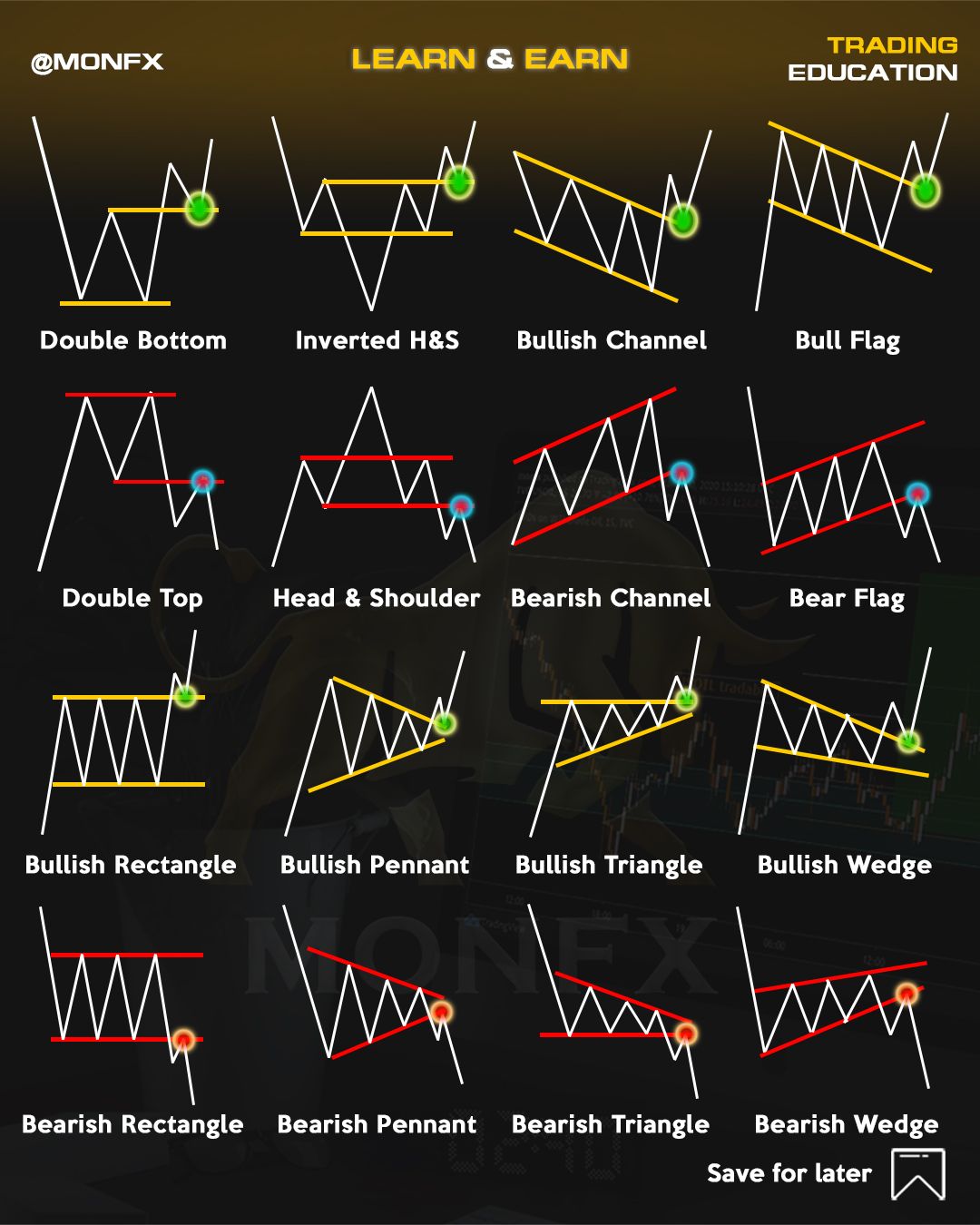
Data, Latency And Edge: Why 2026 Is Different
Scalping lives and dies on a few seconds. A signal that arrives ten seconds late after a price spike is worse than useless; it can be actively harmful. The 2026 update to Forex Free Trading Signals is heavily focused on latency and delivery paths.
What has changed since 2023
Several broker and infrastructure reports between 2023 and 2025 showed:
- Growing adoption of low-latency VPS and co-located servers for retail traders.
- More AI-driven liquidity providers, resulting in faster quote changes and thinner resting liquidity.
- Higher sensitivity of scalping strategies to feed quality and execution speed.
As a result, a free scalping signal must be designed with “time to screen” and “time to execution” in mind, not just win rate or R-multiple in backtests.
Latency sources you need to be aware of
- Signal generation latency: The time between market condition detection and signal creation.
- Distribution latency: The delay over Telegram, email, web, or app notifications.
- Human reaction time: How fast you can read, decide, and click (or let an algo handle it).
- Broker execution latency: Order routing and matching delays, plus possible re-quotes.
How Forex Free Trading Signals addresses this
- Prioritizing only liquid majors and key crosses during high-liquidity sessions.
- Designing signals with entry zones rather than single ticks where appropriate.
- Focusing on setups that allow 3–10 pips of “breathing room” for entry without destroying R:R.
- Testing delivery through multiple channels to minimize practical delay.
How Forex Free Trading Signals Designs Its Signal Framework
Free does not mean low-effort. To build something traders can trust, Forex Free Trading Signals uses a framework closer to how small prop firms structure playbooks than to how typical social channels blast alerts.
Signal generation philosophy
- Market first: Start with volatility, sessions, and macro calendar — not with indicators.
- Structure second: Identify key levels, liquidity pools, and higher-timeframe bias.
- Trigger last: Use price action, order-flow hints, or pattern confirmation for entries.
Signals are not meant to be black-box magic. They are compressed expressions of a full thought process, delivered in a format that scalpers can act on without being overloaded.
Risk and R:R constraints
Forex Free Trading Signals internally filters out setups that do not meet certain minimum criteria:
- R:R generally above 1.5:1 for scalps, higher for swings.
- Stop loss aligned with a logical invalidation level, not an arbitrary pip count.
- Avoiding trades directly into major scheduled news, unless clearly labeled as “event scalp.”
Delivery channels and formatting
Signals are formatted to be scannable in under three seconds:
- Instrument and direction in the first line.
- Entry, SL, TP1, TP2 clearly separated with labels.
- One-line rationale (e.g., “London fakeout into NY continuation” / “H1 supply tap + VWAP rejection”).
- Risk reminder: e.g., “Max 0.5% per account on this setup.”
Internal case example from the brand
From the perspective of the Forex Free Trading Signals editorial team: when we first started publishing signals, traders kept asking for more pairs, more alerts, more “action.” It looked like engagement — until we reviewed performance data: the best-performing accounts were following fewer signals with more discipline. That’s when we introduced hard caps on daily scalping alerts and focused on higher-quality setups during key windows like London open and early New York. The result was fewer forced trades, lower burnout, and more consistent outcomes across our community.
Scalper Use-Cases: Integrating Free Signals Into Real Trading
Signals are only as good as the way you integrate them. Two traders can receive the exact same feed from Forex Free Trading Signals and get wildly different results based on risk, timing, and discipline.
Use-case A: Manual scalper using signals as a bias filter
A London session scalper with a 5–15 pip target range may:
- Open charts 30 minutes before session and mark own levels.
- Check Forex Free Trading Signals for directional bias on the top two pairs.
- Avoid trades that go directly against the signal bias during high-volatility windows.
- Take only trades that align with both personal setup and signal bias.
This trader is not blindly following entries; they’re using signals to reduce second-guessing and overtrading.
Use-case B: Semi-automated execution with alerts
Another trader may plug signals into a semi-automated workflow:
- Use a tool or script to pre-load order tickets with signal levels.
- Set alerts slightly before the entry zone, so they’re ready when price approaches.
- Execute manually but with pre-calculated position size based on account risk.
- Optionally automate partial TP and break-even moves.
Here, Forex Free Trading Signals is the upstream input; the trader still has full control, but substantially reduces cognitive load and reaction time.
Use-case C: Real story from the brand team
From my own experience working with high-frequency users of Forex Free Trading Signals, one memorable case was a New York session scalper who initially treated every signal as mandatory. His equity curve was a roller coaster. After reviewing his data, we asked him to do one thing: only take trades where his own pre-session bias matched the signal direction, and cap at three signals per day. Within a month, his win rate barely changed, but his net profitability and psychological stability improved dramatically because his average loss per day dropped and his worst days were less brutal.
Risk Management Framework For Using Free Signals
The word “free” often tricks traders into over-using signals. You didn’t pay for them, so it feels cheaper to click. But in real terms, your capital is paying for every bad decision. That’s why a strict risk framework matters even more when you are using Forex Free Trading Signals.
Core risk principles when trading free signals
- Fixed percentage risk: Decide a max risk per trade (e.g., 0.25–0.5% for scalps) and stick to it.
- Daily loss limit: Hard cap on how much you can lose in one day (e.g., 1–2%).
- Trade count limit: Cap number of signal trades per session to avoid revenge trading.
- No chasing: If the entry is gone, the trade is gone. No adjusting SL irrationally to make it fit.
Numbered risk-application process
- Define a fixed percentage risk per trade (e.g., 0.5% of account).
- Set a daily loss limit (e.g., 2% of account) and session-specific trade cap.
- Before each session, decide which pairs you will focus on; ignore the rest.
- When a Forex Free Trading Signals alert comes, check if it aligns with your bias and risk rules.
- Only execute if it fits all criteria; log the trade including whether it was signal-based or self-initiated.
Psychological pitfalls
- Signal FOMO: Feeling you “must” take every signal to get full value, even though it’s free.
- External blame: Blaming the signal provider instead of examining position sizing or discipline.
- Overconfidence after streaks: Increasing risk after a short hot streak, then giving back gains quickly.
Forex Free Trading Signals is designed on the assumption that users will face these psychological traps. That’s why messaging around each signal often includes reminders about risk and suggests conservative position sizing, especially during event-heavy days.
Future Trends: AI, Microstructure And The Next Wave Of Free Signals
By 2026, AI is no longer a novelty in forex — it’s baked into liquidity provision, execution algorithms, and some retail tools. For Forex Free Trading Signals, the question is not “AI or not,” but “how to use machine assistance without turning signals into black boxes that traders cannot understand or audit.”
Where AI can genuinely help
- Volatility forecasting: Predicting likely volatility windows on intraday horizons.
- Anomaly detection: Flagging unusual order-flow patterns or spreads that might kill a scalp.
- Post-trade analytics: Clustering winning vs. losing signals by conditions to refine filters.
Where human judgment still dominates
- Reading macro context and central bank tone.
- Understanding “how it feels” to trade through a choppy Friday vs. a trending Tuesday.
- Designing risk frameworks that match human psychology, not just math.
Microstructure changes affecting scalpers
FX market microstructure research through 2025 emphasized increasing internalization and dark liquidity, meaning not all orders interact on the visible book. For scalpers, this leads to:
- Occasional “ghost moves” where price flicks through levels with little visible liquidity.
- Greater importance of spreads and slippage modeling when assessing any signal’s viability.
- Need to backtest and forward-test signals using broker-specific conditions where possible.
Forex Free Trading Signals is responding by focusing on signals that tolerate minor execution noise and by encouraging users to log slippage and spread data per broker.
Conclusion And Action Plan From Forex Free Trading Signals
Scalping in 2026 is not about finding the flashiest Forex Free Trading Signals channel; it’s about plugging the right kind of structured, time-aware, risk-conscious signals into your existing process. High-volatility conditions reward traders who respect latency, spreads, and their own psychological limits far more than those who chase every alert.
Forex Free Trading Signals is built to be your partner in that reality: a source of clearly defined, auditable, genuinely free Forex Free Trading Signals designed around scalper needs, not marketing screenshots. The signals are there to sharpen your focus, not to replace your judgment.
Practical next steps recommended by Forex Free Trading Signals:
- Define your scalper identity: Clarify your sessions, target pairs, and risk per trade on paper before consuming any signals.
- Start with selective adoption: For the first month, only take signals that fully align with your own bias and risk rules, and log them separately for review.
- Build a feedback loop: Use your trade journal to compare performance on signal-based trades vs. self-initiated trades, then refine how you use signals instead of blindly scaling up.
Treated as a disciplined input rather than a magic answer, Forex Free Trading Signals can help you survive and grow through 2026’s high-volatility environment — without paying subscription fees just to see whether a setup fits your edge.
References
- Reports from leading FX infrastructure providers (2023–2025) discussing latency, VPS adoption, and execution quality for retail traders, used to frame why scalpers must respect milliseconds in 2026.
- Market structure research by major investment banks and academic institutions published between 2023 and 2025, highlighting changes in FX internalization, dark liquidity, and volatility clustering.
- Internal analytics from Forex Free Trading Signals aggregating thousands of user trades and signal outcomes, used to derive best practices for signal frequency, risk parameters, and behavioral pitfalls.
FAQ
What exactly are Forex Free Trading Signals for scalpers?
-
Forex Free Trading Signals for scalpers are real-time or near real-time trade ideas on FX pairs that include direction, entry, stop loss, and targets, shared at no direct subscription cost. Unlike generic “tips,” they are structured to be actionable within seconds, with tight stops and modest profit targets suitable for high-frequency, high-volatility trading. The brand Forex Free Trading Signals focuses on adding context and risk guidance so scalpers can integrate the signals into their own playbooks rather than following blindly.
Are Forex Free Trading Signals really free, or is there a hidden cost?
-
Financially, yes: Forex Free Trading Signals does not charge a direct subscription fee for its core signal feed. The real “cost” is how you use them — overtrading, oversizing, or taking trades that don’t fit your broker conditions can hurt your account regardless of subscription price. That’s why the brand emphasizes risk per trade, daily loss limits, and clear rules about when to skip a signal (for example, when price has already moved too far or spreads are temporarily widened).
How should I adjust position size when trading Forex Free Trading Signals?
-
A common approach is to risk a fixed percentage of equity per trade and let the stop loss distance determine lot size. For scalpers, Forex Free Trading Signals typically recommends:
-
0.25–0.5% risk per signal trade for actively trading accounts
-
Daily loss cap of around 2% to prevent emotional spirals
-
Reducing size around major news events or when spreads are wider than average
-
Before sizing up, you should collect a statistically meaningful sample of your own results with the signals on your broker — including slippage and spread behavior — and then consider very gradual increases in risk if performance is stable.
What should I do if a Forex Free Trading Signals entry is already partially played out when I see it?
-
The safest rule is: if price has already traveled more than roughly one-third of the distance to TP1 from the suggested entry when you first see the signal, skip the trade. Entering late compresses your reward-to-risk ratio and makes even a good idea structurally bad. Forex Free Trading Signals designs most entries as zones to allow for minor timing differences, but no signal is worth breaking your R:R rules or chasing into exhausted price. Let it go and focus on the next clean setup.
Can I rely only on Forex Free Trading Signals and ignore building my own strategy?
-
You can execute trades purely based on signals, but long-term consistency is far more likely if you understand why a setup makes sense and how it fits into your overall plan. Forex Free Trading Signals is designed as a “structured input” into your decision-making, not as a replacement for it. Even a simple framework — your preferred sessions, favorite pairs, maximum risk per trade, and basic price-action rules — will dramatically improve how you filter and time the signals and will make it easier to stay disciplined when you hit inevitable losing streaks.