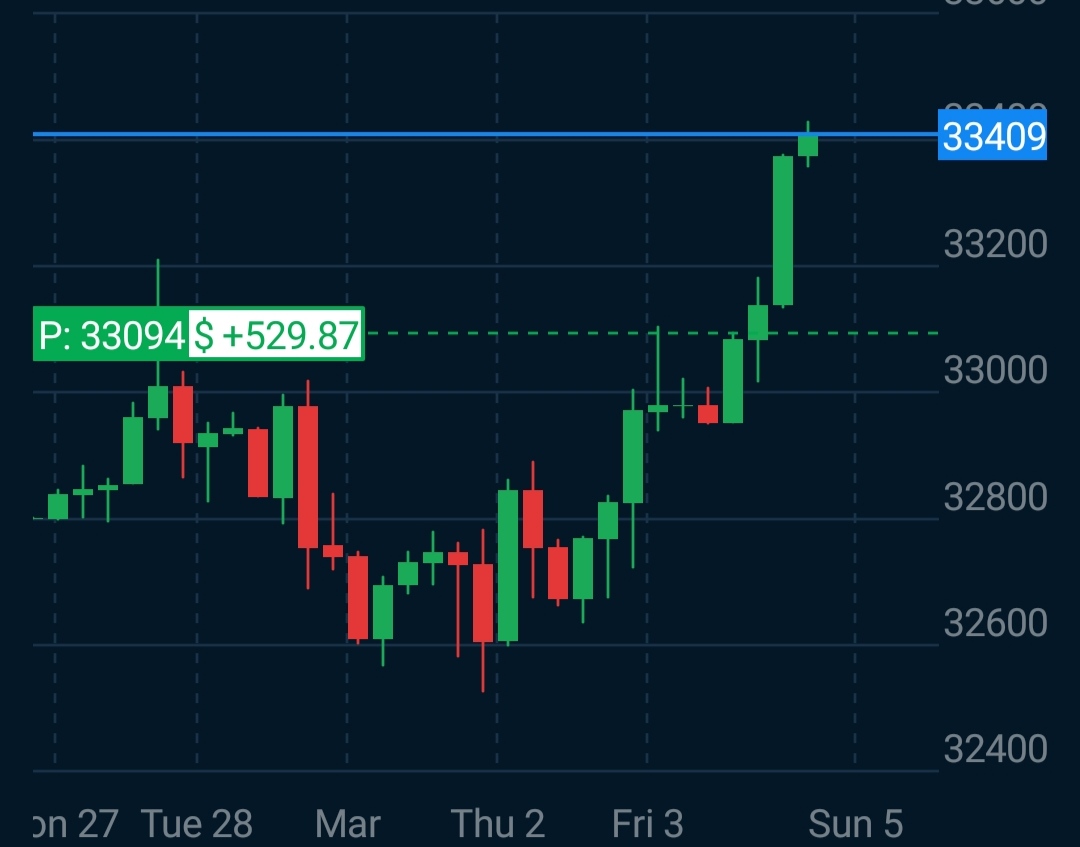
Forex Free Trading Signals 2026: Free vs Paid Subscriptions Compared
Introduction: Are Forex Free Trading Signals Enough To Trade Seriously in 2026?
Scrolling through Telegram, Discord, Instagram, and broker apps, you will see “Forex Free Trading Signals” everywhere—GBPUSD setups, XAUUSD scalps, EURJPY swings, all dropped into your phone in real time and all promising high win rates. The problem is not a lack of signals; it is knowing which ones deserve your capital and whether paying for a subscription actually improves your odds. The wrong choice can lead to overtrading, copying random trades, and turning your account into a stress machine.
Forex Free Trading Signals as a brand was created around a simple idea: if free signals are going to be part of the retail trading ecosystem, they should be transparent, risk-aware, and genuinely educational—not just screenshots of “after-the-fact” wins. Over the past few years, as regulation tightened and platforms matured, the gap between good free signals and paid subscriptions has narrowed in some areas and widened in others. For 2026, the key question is no longer just “free vs paid,” but “which structure gives you repeatable, risk-adjusted results for your specific trading style?”
Forex free trading signals are trade ideas for forex pairs—typically including entry price, stop-loss, and take-profit levels—shared at no direct cost through channels like messaging apps, broker platforms, or websites. Paid signals are similar trade ideas, but delivered to subscribers who pay a recurring fee or a performance-based charge in exchange for claimed higher quality, better risk management, or extra analysis. In both cases, you are outsourcing part of your decision-making, so the real issue is how reliably the signals align with a robust edge and your own risk tolerance.
This article breaks down how Forex Free Trading Signals evaluates and uses both free and paid models, what the data and experience say about each, and how you can build a 2026-ready framework for choosing, testing, and integrating signals into your own trading, rather than letting them control you.
Table of Contents
- Free vs Paid Forex Signals: What Actually Changes?
- Core Components of High-Quality Forex Free Trading Signals
- Cost, Value, and Risk: Comparing Free and Paid Models
- How Forex Free Trading Signals Tests and Uses Signal Services
- Common Traps With Forex Free Trading Signals and Subscriptions
- Technical and Regulatory Trends Shaping Signal Quality in 2026
- How To Build a Practical Signal Workflow Without Losing Control
- Conclusion: Forex Free Trading Signals’ Recommendations for 2026
- References
- FAQ
Free vs Paid Forex Signals: What Actually Changes?
The biggest misconception is that “free” equals low quality and “paid” equals professional. In reality, the difference often lies in incentives, transparency, and how the provider manages risk—not the price tag itself.
Where Free Signals Tend To Shine
Well-structured free signals can be very useful when:
- You are testing a new strategy or time frame without wanting to commit to a subscription.
- You want to compare market views from multiple providers before developing your own bias.
- You value community interaction and commentary as much as the signal itself.
Forex Free Trading Signals has found that some of the best educational content comes from open, free channels where trades are posted live, discussed publicly, and recorded for post-trade review.
What Paid Subscriptions Usually Promise
Paid signal services typically sell on:
- Higher claimed win rates and risk-to-reward profiles.
- More frequent or more selective signals tailored to specific styles.
- Extra features like risk calculators, trade management alerts, and coaching sessions.
According to several 2023–2025 fintech industry reviews of trading services, many paid offers underdeliver on their marketing claims, but a smaller group does provide truly structured, risk-aware frameworks that can justify the cost for serious traders.
The Real Difference: Incentives and Accountability
Free providers can chase follower growth by sending many attention-grabbing signals, cherry-picking winners in public and hiding losses. Paid providers, at least in theory, have an incentive to retain paying clients by delivering consistency and clear reporting. Forex Free Trading Signals tries to apply a “paid-level” transparency standard even to free content: timestamped entries, clear risk parameters, and full trade histories instead of cropped screenshots.
Core Components of High-Quality Forex Free Trading Signals
Before debating free vs paid, you need a checklist for what good signals look like. Without that, you are just comparing marketing promises.
Clarity and Completeness of Each Signal
Every signal—especially Forex Free Trading Signals shared in public channels—should contain at least:
- Instrument (for example, EURUSD, GBPJPY, XAUUSD).
- Direction (buy/sell) and entry price or entry zone.
- Stop-loss level (hard price, not “mental”).
- One or more realistic take-profit targets.
- Timeframe and idea of expected holding period.
If any of these are missing or constantly “adjusted” after the fact, treat it as a red flag regardless of whether the signals are free or paid.
Risk Framing and Position Sizing Guidance
The difference between a good and bad signal often comes down to how it treats risk. Look for:
- Defined risk-to-reward ratio (for example, risking 30 pips to aim for 60+).
- Guidance on partial exits or break-even moves.
- Reminders to size positions as a fraction of account equity, not random lot sizes.
Forex Free Trading Signals consistently emphasizes risk per trade rather than fixating only on “pips gained,” because two traders can make the same number of pips and have completely different account outcomes depending on position sizing.
Evidence, History, and Sample Size
Any provider can post a handful of winning trades. What matters is:
- How many signals have been shared over a meaningful sample (for example, 100+ trades).
- Whether there is a transparent, chronological record including losers.
- How drawdowns are handled and communicated during tough periods.
Several research pieces on retail trading performance between 2023 and 2025 showed that many signal channels report only their best weeks or months, leading traders to grossly underestimate normal variance and expected drawdowns.
Alignment With Your Style and Schedule
A high-quality service may still be a poor fit if:
- Signals arrive mainly during hours when you cannot monitor or execute.
- The average holding time does not match your temperament (for example, multi-day swings for someone who panics after one hour).
- Risk per trade is much higher than you are comfortable with.
Forex Free Trading Signals encourages traders to filter signals through their own trading plan rather than blindly copying every alert. The best signals will feel like a natural extension of your process, not a constant source of FOMO.
Cost, Value, and Risk: Comparing Free and Paid Models
To answer “Which is better for 2026?” you need to weigh subscription costs against expected value and operational risk.
Direct and Indirect Costs of Paid Subscriptions
Paid signal services typically charge:
- Flat monthly or quarterly fees.
- Tiered access (basic vs premium channels, extra pairs, or coaching).
- Performance-based fees or profit sharing in more sophisticated structures.
The direct cost is obvious: if you pay $100 per month, your strategy has to generate at least $100 net profit just to break even on the subscription. The indirect cost is the psychological pressure to “use every signal” because you are paying for them, which often leads to overtrading.
Hidden Costs of “Free” Forex Signals
Free signals can carry their own hidden costs, such as:
- Signals tied to specific brokers with wide spreads or high commissions.
- Being funneled into unregulated or high-risk platforms in exchange for free access.
- Losses from poor-quality trades that you would never take on your own.
Forex Free Trading Signals makes a point of separating signal quality from brokerage recommendations. Any broker relationship is disclosed as such, and users are encouraged to compare spreads and execution quality independently rather than rely on “free” access alone.
Side-by-Side Comparison: Free vs Paid Signals
The practical trade-offs can be summarized like this:
| Aspect | Forex Free Trading Signals (Free Model) | Typical Paid Subscription | Impact on Trader |
|---|---|---|---|
| Cost | No subscription fee, may rely on ads or partnerships | Monthly fee or performance-based payment | Paid models raise your break-even threshold |
| Transparency | Public channels allow open review and debate | Results often shown in marketing materials only | Transparency improves your ability to audit performance |
| Signal Volume | Can vary; some channels share selectively, others frequently | Often promises “multiple daily signals” as selling point | Too many signals can lead to overtrading and fatigue |
| Support & Education | Community discussions, occasional breakdowns of setups | More structured materials, Q&A calls, or coaching tiers | Education helps you grow beyond pure copying |
| Incentive Alignment | Brand reputation depends on open-track record and user trust | Revenue tied to subscriptions, sometimes more than to performance | Misaligned incentives can create over-optimistic marketing |
No table can answer the question on its own, but it highlights that “free vs paid” is really about which mix of incentives and features supports your trading practice without sabotaging your discipline.
When Paying Can Make Sense
Paying for signals may be justified if:
- You have backtested and paper-tested the service and confirmed a real edge.
- Your account size is large enough that subscription costs are a small fraction of potential returns.
- The service offers real education and process insight, not just bare signals.
Forex Free Trading Signals often advises traders to treat any paid subscription as a business expense: if you cannot quantify how it improves your risk-adjusted returns, you probably should not renew.
How Forex Free Trading Signals Tests and Uses Signal Services
Rather than just reviewing services from the outside, Forex Free Trading Signals runs real-world tests to understand how different models behave across market conditions.
Building a Testing Framework
Over the last several years, the team behind Forex Free Trading Signals has used a simple but strict process to evaluate signal providers:
- Collect a live sample of at least 50–100 signals from a provider without cherry-picking.
- Execute them in a demo environment using conservative risk per trade.
- Track performance metrics: win rate, average reward-to-risk, maximum drawdown, and equity curve shape.
- Review communication quality around losing streaks and volatility spikes.
This approach quickly reveals whether a flashy track record holds up when duplicated under realistic conditions.
Case Study: Free Channel vs Paid Room
In one internal experiment, I ran two parallel demo accounts over three months:
- Account A followed a popular free signals channel, including Forex Free Trading Signals’ own curated ideas and a couple of external sources.
- Account B followed a paid subscription promising “80% win rate” and multiple daily setups.
Account A ended slightly positive with a mild drawdown and relatively low trade frequency. Account B had more winning trades in absolute terms but suffered larger drawdowns because risk guidelines were vague and many trades overlapped in correlated pairs. The net result was that the paid service did not outperform the curated free mix once realistic money management was applied.
Integrating Signals Into a Broader Process
Forex Free Trading Signals does not treat signals as standalone products. Instead, the workflow looks like this:
- Use signals as a starting point to look at charts and understand the rationale.
- Filter out trades that clash with your own risk rules or macro view.
- Manage entries, exits, and position sizes yourself, even when following the general idea.
This hybrid model turns signals into a source of ideas and confirmation, rather than a substitute for your own thinking.
Signals should be a second opinion, not your only opinion. If you cannot explain a trade to yourself, you are not really following a strategy—you are just following someone else’s risk.
Common Traps With Forex Free Trading Signals and Subscriptions
Whether you pay or not, there are psychological and structural traps that can quietly erode your account.
Signal Overload and FOMO
Problems that frequently show up include:
- Subscribing to multiple channels and taking trades from all of them, creating conflicting positions.
- Chasing every alert in fear of “missing the big one.”
- Abandoning your original plan whenever a new signal appears.
Forex Free Trading Signals often encourages traders to limit themselves to one or two primary sources and to define in advance which setups they will take and which they will ignore.
Martingale and “Recovery” Schemes Hidden in Signals
Some signal providers quietly rely on dangerous position management, such as:
- Adding to losing positions multiple times without a hard stop.
- Using extremely wide stops to make “win rate” look high on paper.
- Calling a heavily averaged-down position “still valid” long after the original rationale broke.
These patterns can lead to long periods of small wins followed by catastrophic blowups. When Forex Free Trading Signals audits a provider, it looks carefully at how losing trades are handled, not just how often wins occur.
Unregulated “VIP Rooms” and Deposit Requirements
A particularly risky pattern in 2024–2025 has been “free signals” that require you to:
- Open accounts with specific, lightly regulated brokers.
- Deposit minimum amounts to gain access to “VIP” signal rooms.
- Follow high-leverage trades to meet hidden volume targets that benefit the provider.
Forex Free Trading Signals explicitly warns users not to equate access to a VIP group with quality. Any condition that ties signal access to specific deposit levels should be treated with caution and checked against regulatory guidance where you live.
Technical and Regulatory Trends Shaping Signal Quality in 2026
Signal services do not operate in a vacuum. Changes in technology and regulation directly affect how Forex Free Trading Signals and similar providers can operate.
AI-Assisted Signal Generation and Its Limits
From 2023 onward, many platforms started advertising AI-generated forex signals. These tools can:
- Scan hundreds of pairs and time frames quickly.
- Detect patterns and correlations that humans might miss.
- Provide consistent rule-based setups if properly designed.
However, industry research has repeatedly found that AI models are prone to overfitting and can break down when market regimes shift. Forex Free Trading Signals treats AI as an assistant for screening and backtesting, but still subjects AI-generated ideas to human review before sharing them as actionable signals.
Stricter Marketing and Performance Reporting Rules
Several financial regulators have increased scrutiny on how trading services market returns and risk. This affects signal providers by:
- Restricting the use of unverified performance claims.
- Requiring clearer risk warnings alongside promotional content.
- Pushing platforms to vet financial services before allowing paid ads.
Forex Free Trading Signals aligns with this direction by focusing on process and risk education rather than aggressive performance claims, which also builds long-term trust with users.
Better Tools for Self-Testing Signals
New tools emerging between 2024 and 2026 make it easier for traders to:
- Import signal histories into charting and backtesting platforms.
- Simulate account performance under different risk and leverage settings.
- Visualize correlations between multiple signal sources.
This means that by 2026, serious traders have fewer excuses for not testing signal providers. Forex Free Trading Signals actively encourages users to download histories and run their own analyses, rather than rely on testimonials.
How To Build a Practical Signal Workflow Without Losing Control
Whether you lean toward free or paid options, you need a workflow that keeps you in charge of your risk and decisions.
Defining Your Role Before You Follow Signals
Ask yourself:
- Are you using signals as a learning tool, a supplemental idea source, or your main trade engine?
- How many trades per week can you realistically monitor and manage?
- What maximum drawdown can you tolerate before you stop a strategy?
Forex Free Trading Signals often sees the best results when traders treat signals as part of a broader plan, not as the plan itself.
A Simple Step-by-Step Workflow
Here is a practical sequence you can adapt:
- Choose one or two signal sources, starting with free options like Forex Free Trading Signals to minimize cost.
- Forward-test signals in a demo account for at least 50 trades, logging entries, exits, and your own notes.
- Define clear filters: allowable pairs, maximum simultaneous positions, and maximum risk per trade.
- Graduate to a small live account with the same rules and gradually scale position sizes only after surviving a full drawdown cycle.
This process prioritizes survival and learning over chasing short-term gains.
Combining Free and Paid Without Chaos
If you decide to mix models, you can:
- Use Forex Free Trading Signals as your broad market radar for multiple pairs and directions.
- Reserve any paid subscription for a very specific style or niche that you have already validated.
- Allocate different portions of your account (or different accounts entirely) to each stream to avoid overlapping risk.
The key is to avoid treating all signals as equal. Each stream should have its own role, rules, and risk budget.
Conclusion: Forex Free Trading Signals’ Recommendations for 2026
Free vs paid is the wrong first question. The right questions are: “Does this source have a real edge?” and “Can I use it without breaking my own risk rules?” For many traders, high-quality Forex Free Trading Signals combined with disciplined execution and independent analysis will provide more value than rushing into expensive subscriptions.
Based on experience and current trends, Forex Free Trading Signals suggests three concrete next steps:
- Audit your current signal sources: List every channel and service you follow, note their true performance over at least 50 trades, and cut any that cannot justify their cost or emotional impact.
- Build a test-and-verify habit: Before committing real money to any new signals, run them in demo and log your results. Treat this as mandatory, not optional.
- Use signals as a learning accelerator: For each trade you take from Forex Free Trading Signals or any other provider, spend a few minutes studying the chart and writing down why the trade might make sense. Over time, aim to be able to generate similar setups yourself.
Signals can be a powerful ally or a dangerous distraction. The difference lies in how you choose, test, and integrate them into a disciplined 2026 trading framework.
References
Independent fintech research firms’ reviews of retail trading and signal services published between 2023 and 2025, which analyzed business models, marketing practices, and typical performance claim patterns for free and paid offerings.
Regulatory guidance and public communications from major financial authorities issued between 2023 and 2026 regarding retail forex marketing, performance reporting, leverage limits, and the oversight of copy-trading and signal-providing services.
Internal testing and anonymized case studies conducted by Forex Free Trading Signals, including controlled demo account experiments that compared free signal channels and paid rooms under standardized risk management rules.
FAQ
Are Forex Free Trading Signals good enough without paying for a subscription?
-
They can be, if you choose the right sources and apply proper risk management. High-quality Forex Free Trading Signals often look very similar to what paid services deliver: clear entries, defined stops and targets, and consistent logic. The real difference is usually transparency and how you use them. If you forward-test a free signal source over dozens of trades and see stable performance, there is no rule that says you must upgrade to a paid service. What matters is that you size positions sensibly, stick to your own risk limits, and avoid overtrading just because the signals cost you nothing.
How can I tell if a paid forex signal subscription is worth the money?
-
Start by asking for an unedited trade history and run your own forward test in a demo account before paying for more than one billing cycle. Compute basic metrics: win rate, average reward-to-risk, maximum drawdown, and how often signals arrive at times you can actually trade. Then compare the net profit you could reasonably expect against the subscription cost. If you are paying $100 per month, your system must generate significantly more than $100 after costs and slippage to make sense. Forex Free Trading Signals recommends cancelling or downgrading any service that cannot clearly improve your risk-adjusted returns or your skills within a few months of disciplined testing.
What are the biggest risks of relying on Forex Free Trading Signals channels?
-
The main risks are overtrading, inconsistent quality, and poor risk management practices built into some channels. Many free groups flood users with alerts across multiple pairs, encourage adding to losers, or rarely show losing trades publicly, which can distort your expectations. There is also the danger of being pushed toward unregulated brokers or “VIP” rooms that require high deposits. Forex Free Trading Signals advises traders to treat any signal—free or paid—as just one input, to keep risk per trade small, and to exit any channel that refuses to show full histories or discuss drawdowns honestly.
How should I integrate Forex Free Trading Signals into my own trading plan?
-
The most sustainable approach is to define your rules first and let signals sit inside those boundaries. Decide in advance which currency pairs you trade, what timeframes you focus on, and how much you risk per position. Then use Forex Free Trading Signals as a source of ideas that fit your criteria, rather than as orders to be followed blindly. Before taking any signal, check that it aligns with your overall bias and does not push your total exposure beyond your limits. Over time, use signal-based trades as case studies: screenshot the chart, write down what you think the rationale is, and review the outcome later to refine your own edge.
Do I need both free and paid forex signals, or should I focus on one?
-
Most traders are better off mastering one or two high-quality sources than juggling many at once. Starting with free signals, such as those from Forex Free Trading Signals, lets you learn how to follow and test strategies without creating subscription pressure. If, after serious testing, you find a paid service that offers a clear, complementary edge—such as a different timeframe or strategy niche—you can add it with a separate risk budget. The key is to avoid overlapping risk or taking conflicting trades from multiple providers. Quality and fit matter far more than the number of channels you follow.